



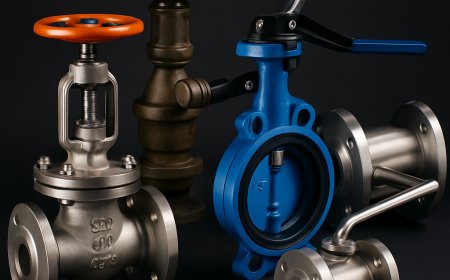













Latest Comprehensive Heptanol Manufacturing Plant Project Report by Procurement Resource
Procurement Resource, a trusted leader in procurement intelligence and market research, has released its latest Heptanol Manufacturing Plant Project Report.

Procurement Resource, a trusted leader in procurement intelligence and market research, has released its latest Heptanol Manufacturing Plant Project Reporta must-read for entrepreneurs, investors, and industrial players aiming to establish or expand their footprint in the specialty chemical sector. This in-depth report provides a complete roadmap for setting up a Heptanol production unit, covering everything from market analysis and technical process details to cost structures and sustainability insights.
Heptanol: A Versatile Linear Alcohol with Expanding Industrial Applications
Heptanol, also known as 1-Heptanol, is a seven-carbon straight-chain primary alcohol with the chemical formula C7H16O. It appears as a colorless, oily liquid with a mild alcoholic odor. Due to its chemical stability, solvent properties, and relatively low toxicity, heptanol is used across multiple sectors including:
- Pharmaceuticals
- Fragrance and Flavor Manufacturing
- Plasticizers and Lubricants
- Surfactants and Agrochemicals
As industrial formulations shift towards biodegradable and eco-friendly alternatives, demand for medium-chain alcohols like heptanol is gaining momentum globally.
Complete Manufacturing Plant Report for Strategic Implementation
Procurement Resource's Heptanol Manufacturing Plant Report offers detailed, actionable insights for businesses planning to set up a new production unit or optimize an existing one. The report includes market trends, process flows, raw material requirements, infrastructure needs, cost modeling, and return-on-investment (ROI) analysisensuring businesses make informed and profitable decisions.
Market Analysis:
The report includes a comprehensive assessment of the heptanol market landscape, addressing both macroeconomic and industry-specific factors:
Global Market Trends:
- Rising demand for bio-based solvents in coatings and adhesives
- Increased use of heptanol in perfume compositions as a fixative
- Demand growth in chemical intermediates and pharmaceutical excipients
Key End-Use Industries:
- Personal Care & Cosmetics as a solvent in fragrances
- Pharmaceuticals as a precursor for drug synthesis
- Agriculture in formulation of crop protection agents
Regional Market Dynamics:
- Asia-Pacific leads in consumption, especially in China and India, due to rising demand for specialty chemicals.
- North America and Europe emphasize eco-friendly solvent alternatives, driving innovation in C7-C10 alcohols.
Raw Material Price Trends:
- Analysis of pricing and supply chain for heptanal, hydrogen, and alternative raw materials
- Impact of crude oil derivatives and bio-feedstocks on production economics
Regulatory Environment:
- Compliance requirements under REACH, EPA, and OSHA
- Volatility in international trade policies and chemical safety standards
Technical and Operational Insights:
The report outlines the industrial production process of Heptanol, focusing on modern technologies, efficient resource usage, and pollution control measures.
Common Manufacturing Methods:
Hydrogenation of Heptanal:
Heptanol is most commonly produced through the catalytic hydrogenation of heptanal, a seven-carbon aldehyde.
Reaction:
C7H14O (Heptanal) + H2 ? C7H16O (Heptanol)
The reaction is carried out under elevated pressure in the presence of metal catalysts such as nickel or palladium.
Alternative Routes (Bio-based Synthesis):
- Fermentation of fatty acids derived from castor oil or coconut oil
- Biotechnological conversion using engineered microbes (emerging)
Key Equipment and Machinery:
- Reactor vessels with hydrogenation capability
- Heat exchangers, cooling towers, and distillation columns
- Gas scrubbers, condensers, and vacuum systems
- Catalyst loading/unloading equipment
- Storage tanks, pipelines, and automated control systems
Infrastructure and Utility Requirements:
- Chemical-resistant flooring and explosion-proof electrical systems
- Utilities including steam, cooling water, compressed air, and inert gases
- Effluent Treatment Plant (ETP) and emission management infrastructure
- Fire safety systems and hazardous material handling protocols
Manpower and Operational Needs:
- Chemical engineers, process operators, QC technicians
- Maintenance, logistics, and regulatory compliance personnel
- Health and safety officers for risk mitigation
Financial and Economic Assessment:
The Heptanol Manufacturing Plant Report provides a detailed economic feasibility study tailored to different plant scales and regional cost parameters.
Capital Investment:
- Fixed Capital:
- Land, civil construction, and plant design
- Machinery procurement and installation
- Working Capital:
- Procurement of raw materials
- Salaries, utilities, and inventory management
Operating Cost Analysis:
- Raw material and catalyst consumption
- Utility charges (electricity, steam, cooling)
- Labor costs and routine maintenance
- Environmental compliance and waste treatment
Profitability and ROI:
- Break-even analysis at various capacity utilizations
- Cash flow forecasting for up to 10 years
- Internal Rate of Return (IRR) and Net Present Value (NPV) metrics
- Sensitivity analysis to assess price and supply volatility
Sustainability and Emerging Market Trends
As sustainability becomes a central concern in chemical manufacturing, the production of heptanol is evolving to meet environmental and regulatory standards.
Green Manufacturing Initiatives:
- Bio-based feedstocks for heptanol synthesis, reducing fossil fuel dependency
- Closed-loop solvent recovery systems to minimize emissions
- Adoption of low-waste catalytic technologies for cleaner synthesis routes
Growth Trends:
- R&D investment in microbial and enzymatic synthesis pathways
- Increasing adoption of heptanol in green solvent formulations
- Rising demand from eco-conscious personal care brands
- Customization in chain-length alcohol blends for industrial solvents
Companies adopting cleaner technologies and aligning with global green chemistry principles are poised to gain a competitive edge in the coming years.
Why Choose Procurement Resource?
Procurement Resource is a leading provider of strategic market insights, procurement support, and cost analysis. With deep expertise in specialty chemicals and industrial manufacturing, the company empowers stakeholders with data-driven strategies to optimize operations and minimize risks.
Key Offerings Include:
- Production cost modeling for raw materials and end-products
- Market entry feasibility and regulatory guidance
- Supplier analysis and sourcing strategy development
- Sustainability consulting and life cycle analysis (LCA)
Procurement Resources comprehensive approach ensures clients are well-equipped to achieve operational excellence and long-term profitability.
Request a Free Sample Report
Are you considering launching a Heptanol Manufacturing Plant? Gain expert insights and reliable data to support your investment with our free sample report.
? Request Your Free Sample Report Here: https://www.procurementresource.com/reports/heptanol-manufacturing-plant-project-report/request-sample
About Procurement Resource
Procurement Resource is a global consulting firm offering procurement intelligence, industrial feasibility studies, and supply chain optimization solutions. With a powerful research platform and a team of domain specialists, the firm serves industries including chemicals, pharmaceuticals, energy, agriculture, and food processing.
Contact Information:
Company Name: Procurement Resource
Contact Person: Ashish Sharma (Sales Representative)
Email: sales@procurementresource.com
Location: 30 North Gould Street, Sheridan, WY 82801, USA
Phone:
UK: +44 7537171117
USA: +1 307 363 1045
Asia-Pacific (APAC): +91 1203185500